

Exclusive 20% Off for New Customers
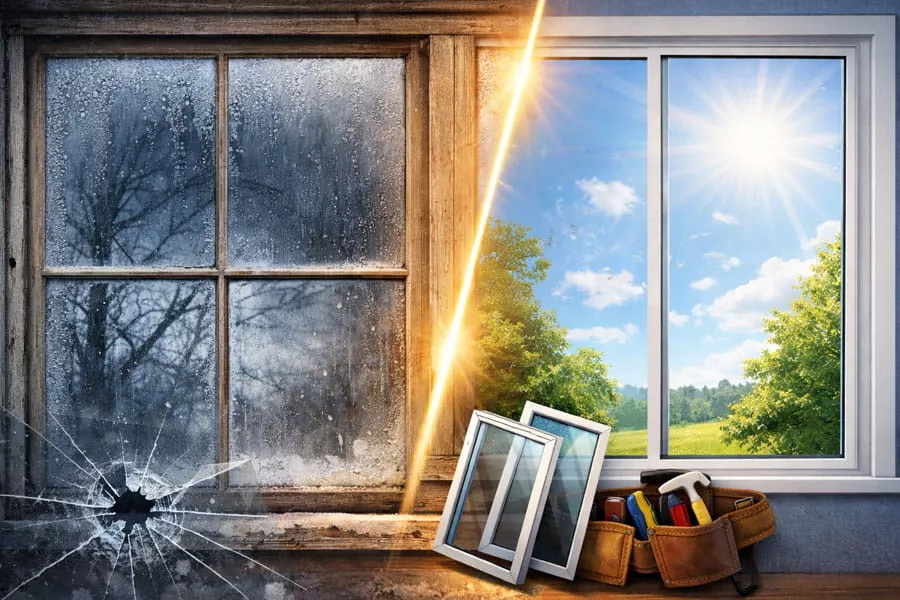
Many older buildings and houses still have single-pane windows. While they once served well, modern needs have changed. Energy costs have risen. The expectation of comfort has gone up. As a result, it may not be worth repairing any further. Replacement, in most cases, proves to be the wiser choice.
So, how do you decide? Let’s break it down clearly.
Understanding Single Pane Windows
One-layered windows are single-pane. Consequently, they offer low insulation. In winter, heat is lost readily. Similarly, in summer, hot air comes in. These problems in the long and short run lead to higher energy costs and less comfort.
Small repairs can only provide a short-term solution, but do not resolve the fundamental issues. Thus, replacement can be more advantageous in the long run.
When Cracks Keep Coming Back
Even little cracks can appear innocent. Nevertheless, repeated cracking is an indication of a deeper problem. Glass weakens with age. Stress also occurs due to temperature changes. You can repair minor cracks once. Yet, repeated fixes waste money. Moreover, cracks compromise safety. They can spread suddenly.
In this case, replacement works better. A new window restores strength and reliability. It also removes the risk of sudden breakage.
Rising Energy Bills Are a Red Flag
Energy loss remains the biggest drawback of single-pane windows. Even with repairs, insulation stays poor. Cold drafts still enter. Conditioned air still escapes. As a result, HVAC systems work harder. Consequently, energy bills rise every month.
Instead of constant repairs, replacing windows instantly improves efficiency. Double- or triple-pane options reduce heat transfer. Over time, energy savings offset replacement costs.
Constant Drafts Mean Structural Failure
Drafts often signal frame issues. Wood frames may warp. Metal frames may loosen. Seals may fail.
While caulking helps briefly, it does not fix warped frames. Therefore, drafts return quickly. At this stage, replacement becomes necessary. New windows seal properly. They also block air leaks effectively. Comfort improves immediately.
Excessive Condensation Signals Trouble
Condensation appears when indoor and outdoor temperatures clash. Single-pane Glass worsens this problem. Moisture builds quickly. Over time, condensation causes mold growth. It also damages sills and walls.
Repairing Glass does not fix condensation. The problem lies in poor insulation. Therefore, replacing single-pane windows solves the root cause. This is where professional help matters. Many homeowners choose Best Offer Glass for efficient window upgrades that reduce condensation and protect interiors.
Noise Pollution Is Getting Worse
Single-pane windows let outside noise in easily. Traffic sounds pass through. Construction noise becomes disruptive. Even regular street activity feels louder. Repairs cannot improve sound insulation. Glass thickness remains the same.
Replacement, however, significantly reduces noise. Modern windows include insulated layers. As a result, homes feel quieter and more peaceful.
Old Frames Are Beyond Repair
Frames age faster than Glass—wood rots. Metal corrodes. Vinyl becomes brittle. Once frames degrade, repairs become less effective—paint peels. Gaps widen—water leaks in.
Instead of patching damaged frames, replacement offers a clean solution. New frames restore structure and appearance. They also increase property value.
Safety Standards Have Changed
Older windows often lack safety features. They break into sharp shards. Locks may fail. Security remains weak. Repairing Glass does not improve safety. Meanwhile, modern windows use tempered or laminated Glass. These options reduce injury risks. Therefore, replacement protects families better. It also improves security against break-ins.
Frequent Repairs Cost More Over Time
One repair seems affordable. Two repairs feel manageable. However, repeated fixes add up quickly.
Over several years, repair costs may exceed replacement costs. Yet, comfort and efficiency remain low. Replacing windows ends the repair cycle. It also provides lasting benefits. Energy savings, comfort, and durability make replacement worthwhile.
Your Home’s Value Matters
Buyers notice windows immediately. Single-pane windows suggest outdated systems. They lower the property appeal. While repairs temporarily maintain appearance, they do not add value. Replacement, however, modernizes the home. New windows attract buyers. They also increase resale value. Therefore, replacement becomes an investment rather than an expense.
Be Weather Damage Makes Repair Pointless
Storms, hail, and extreme heat weaken old Glass. Single-pane windows handle weather poorly. After severe weather damage, repairs rarely last. Glass remains vulnerable. Frames stay weak. In such cases, replacement ensures durability. New windows handle harsh conditions better. They also protect interiors effectively.
When Replacement Is the Smarter Choice
You should replace single-pane windows if:
- Cracks keep returning
- Energy bills continue rising
- Drafts never stop
- Condensation causes damage
- Noise becomes unbearable
- Frames show rot or corrosion
- Repairs happen frequently
Each of these signals points toward replacement.
Single-pane windows belong to the past. While repairs help briefly, they cannot match modern performance. Comfort, efficiency, safety, and value all suffer. Replacing windows solves these problems at once. It reduces costs long-term. It improves living conditions. It also boosts home value.
If your windows show multiple warning signs, replacement makes more sense than repair. Homeowners trust Best Offer Glass for professional window replacement solutions that deliver lasting comfort and efficiency.
Recent Posts
- storefront glass repair san francisco bay area
- The Most Common Storefront Glass Issues Business Owners Face After Winter
- What to Expect Before Installing Office Interior Glass Walls in Your Workspace
- Is It Time to Replace Your Storefront Glass? Signs Business Owners Often Ignore
- Why Commercial Glass Upgrades Are Becoming a Priority for Growing Businesses
- How Quick Storefront Glass Repair Helps Prevent Customer Loss
- The Hidden Risks of Delaying Curtain Wall Repairs for Commercial Properties
- Custom Storefront Glass Installation for Modern Retail and Offices
- Upgrade Your Business Image with Professional Storefront Glass Replacement
- Why More Commercial Buildings Are Switching to Modern Curtain Wall Systems
Save 20% on Glass Repair & Installation
Get your exclusive discount code by filling the form below. Use it on your first service and start saving today.

Join Our Newsletter
Office Timings
- Sunday-Monday: Closed
- Tuesday-Thursday: 10:00am - 6:00pm
- Friday and Saturday: 10:00am - 3:00pm

©2026 Best Offer Glass. Lic # 1106427
Crafted with DigiCorns
Get a FREE Consultation!
Call Us at (415) 310-6948 NOW
to be connected to one of our experts!